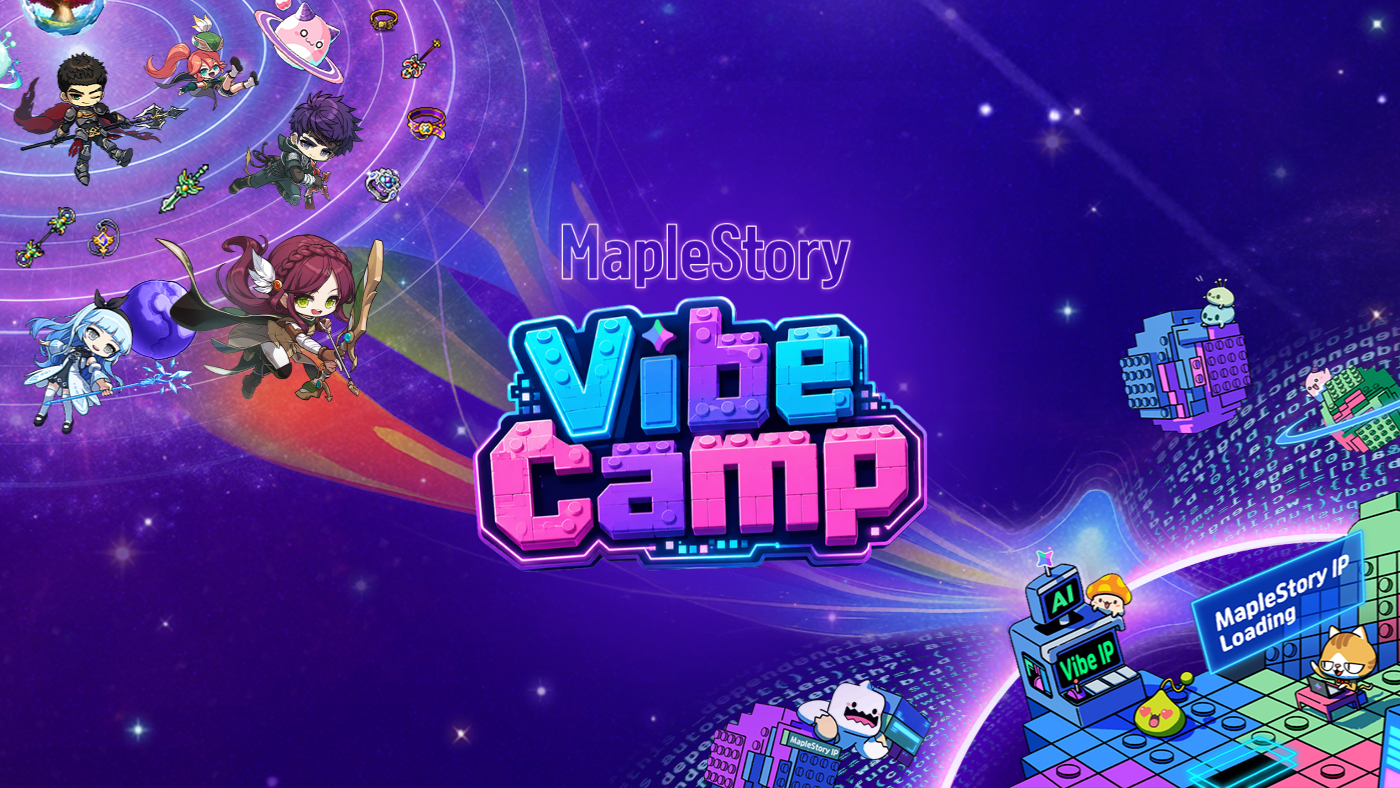
MSU Space opened alongside the launch of MapleStory Vibe Camp, a global builder competition inviting users to create original games and experiences using official MapleStory Universe resources. The campaign coincides with the opening of MSU Space, a dedicated builder hub developed in collaboration with AI-powered game creation platform Verse8. It marks the first major public activation of MSU 2.0, MapleStory Universe's next phase of growth following its first year of live operations.
What Milestone This Launch Is Building On
The launch follows a first year of live operations that celebrated surpassing 150 million cumulative on-chain transactions and generating approximately 49.1 million NXPC, equivalent to US$31 million, in ecosystem revenue. This heralds MapleStory Universe's expansion from a single game environment into a broader platform designed to support creation, distribution, and monetization opportunities built around the MapleStory IP.
What MSU Space Actually Gives Builders Access To
At the center of the initiative is MSU Space, a dedicated environment within Verse8 that provides users access to official MapleStory Universe assets, resources, and development tools. Through the platform, builders can leverage MapleStory-themed characters, monsters, items, environments, and lore while using Verse8's AI-assisted game creation capabilities. That lets participants develop projects through natural language prompts, iterate on gameplay concepts, and publish completed experiences directly through the platform.
What the MapleStory Vibe Camp Competition Actually Offers
Running from June 8 to June 29, MapleStory Vibe Camp offers a total prize pool of US$60,000 in NXPC and is open to builders worldwide. Through the platform, participants build and publish MapleStory-inspired experiences. Selected projects receive recognition, rewards, and potential opportunities for future ecosystem participation beyond the competition period itself.
Why This Represents a Genuine Shift in Who Can Build With the IP
For decades, building with major gaming IPs has largely been limited to professional studios and approved partners, according to Verse8 CEO Kevin Lee. The platform opens that access to independent builders and AI-native creators. That's a meaningfully different access model than the closed, studio-controlled approach that has historically governed how established gaming franchises get extended.
What MapleStory Universe's CEO Said About This Phase
Sun Young Hwang, CEO of Nexpace, said MapleStory Universe has demonstrated over the past year that a large-scale game economy can successfully operate onchain. She framed the next chapter as expanding who participates in building it. She noted that as AI continues to lower the barrier to game creation, the distinction between player and builder becomes less fixed, and MapleStory IP becomes the foundation that both groups create from and around.
MSU 2.0's Broader Objective Beyond This Single Competition
The launch reflects the broader objectives of MSU 2.0, which aims to transform MapleStory from a traditionally closed-game IP into a programmable ecosystem where communities can create new experiences, applications, and services using MapleStory IP. MSU 2.0 seeks to reduce the barriers traditionally associated with IP-based creation by combining onchain infrastructure, AI-assisted creation tools, and community-driven participation into one unified framework.
Why This Collaboration Targets a Specific New Audience
As MapleStory Universe expands beyond a single game experience, creating accessible entry points becomes increasingly important. The collaboration with Verse8 provides an environment where builders can discover ecosystem opportunities, experiment with fresh concepts, and participate in the broader vision of MSU 2.0. It introduces MapleStory Universe to a wider audience of developers and AI-native builders who may be encountering the ecosystem for the first time.
Opening established IP to outside builders through AI-assisted tools like this reflects a similar democratization approach to DeLorean's community-owned onchain IP model, both aiming to shift established brands from tightly controlled properties into community-participatory ecosystems.
Glossary
- Game jam: A time-limited competition where builders create original games or experiences, often around a specific theme or set of provided resources.
- AI-assisted game creation: Development tools that let builders create playable game content through natural language prompts rather than traditional coding alone.
- Programmable ecosystem: A platform structure where third-party builders can create applications, experiences, or services using a shared underlying IP or infrastructure.
Disclaimer
Nothing in this article should be read as financial or investment advice; it is provided for informational purposes only. Competition participation and prize eligibility are subject to specific terms and conditions. Confirm current details directly through official MapleStory Universe announcements.